All projects
Public Health • 12 months • 2023–2024

Rivita — B2B Brand Identity Case Study

B2B institutional brand: identity and positioning for an independent healthcare provider.

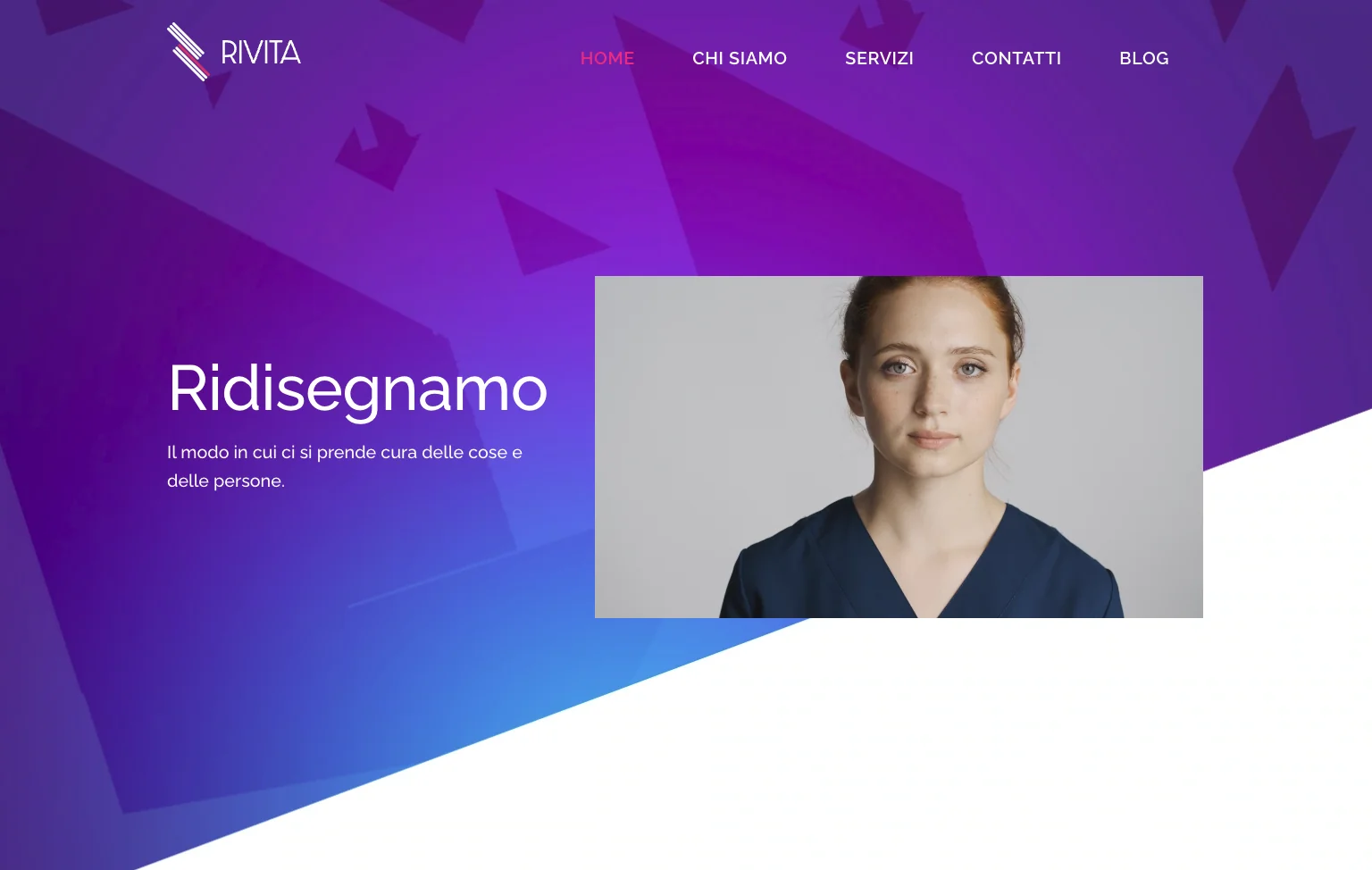
Rivita website
Duration
12 months
Phases
5 completed
Outcome
Brand built
Journey 2023–2024
Start
2023
Decode
2023
Define
2023
Design
2024
Deploy
2024
Develop
2024
Context

Identity and positioning for a complex healthcare system

Rivita was created as an independent healthcare company, aiming to operate in high operational and institutional complexity: management and sanitization of medical aids, process traceability, technical services and maintenance of critical infrastructure, including medical gas systems.

When Kredo entered the project, Rivita was not a brand to reposition but a system to found. The main risk was not a lack of operational capabilities, but the absence of an identity able to hold together different services under a single logic, credible to public entities and healthcare stakeholders.

The priority was to build an institutional language able to make the operational perimeter clear.

PHASE_01

Decode

Clarify the system before the brand: B2B positioning

Decode focused on a deep analysis of the operational perimeter and the institutional context in which Rivita operates.

Three main issues emerged:

  • Potential fragmentation of services
  • Risk of being perceived as a simple operational provider
  • Lack of a language capable of engaging public healthcare

Decode allowed Rivita to be defined not as a set of activities, but as an infrastructure system in service of care.

PHASE_02

Define

Found institutional identity, role, and language

Unlike other projects, in Rivita the Define phase coincided with the full founding of the brand.

Kredo defined:

  • Naming and positioning
  • Company role as a service infrastructure
  • A sober and precise institutional language
  • A clear perimeter between operations, responsibility, and vision

The payoff “Rethink care” was conceived not as a slogan, but as a synthesis of an approach that integrates efficiency, responsibility, and systemic vision.

PHASE_03

Design

A future‑oriented institutional identity

Rivita’s visual identity was designed by avoiding the conservative codes typical of the healthcare sector.

The design focuses on formal cleanliness, contemporaneity, clarity, and a tension toward the future.

The goal was not to reassure, but to make visible a possible evolution of the care system.

PHASE_04

Deploy

Make the system clear

Deploy focused on building the main institutional touchpoints, starting with the website.

The website was designed as a tool for clarity, not promotion, able to explain Rivita’s role, perimeter, and responsibilities in regulated and complex contexts.

PHASE_05

Develop

Prepare evolution

The work built an identity base ready to support future evolutions: new services, technological integrations, and growth in operational complexity.

Rivita was designed as an open system, not a static brand.

Impact

Selected outcomes

Built from scratch a credible identity for complex institutional contexts

Transformed fragmented operational services into a clear system

Greater role clarity toward public entities and healthcare stakeholders

Identity base ready to support technological and process evolutions

Reduced ambiguity between operational provider and service infrastructure

FAQ

What does a KREDO case study cover?

Context analysis, objectives, positioning choices, brand identity, and measurable outcomes, with a focus on strategic decisions.

What is the difference between rebranding and positioning?

Rebranding changes symbols and language; positioning redefines the brand’s role in the market. We address both when needed.

How long does a B2B brand transformation take?

It depends on complexity and stakeholders. Typically 6–18 months for a full identity and positioning program.

Do you work on generational transitions?

Yes. Many projects start from generational change or post‑acquisition, aligning identity, structure, and market.